Food and protein
GLP-1 Foods Ranked by Protein per 100 g
GLP-1 foods ranked by protein per 100 g from USDA FoodData Central: 28 foods, soft options for low appetite, and a worked example per 20 g of protein.
Guides
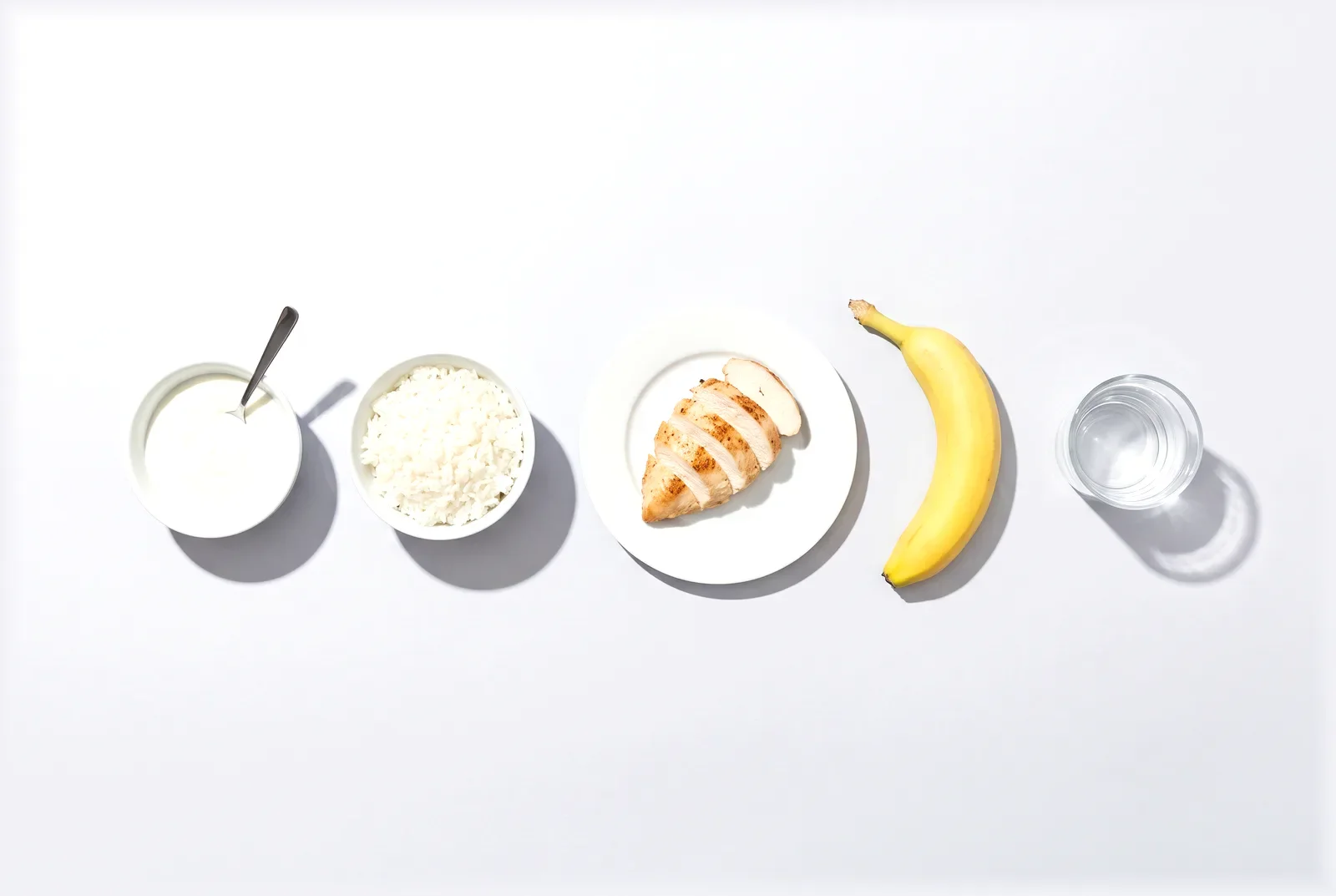
Wondering what to eat on Ozempic when a dose is due? Choose small, lower-fat meals, and build each one around a protein food such as nonfat Greek yogurt or chicken breast. The Ozempic label says the medicine may be taken with or without food, so no particular meal is required that day. Smaller portions of lower-fat food are this article's reasoning from slowed digestion, and the USDA figures below show which foods give protein with little fat. Your prescriber decides anything about your dose.
In short
- The Ozempic, Mounjaro and Wegovy labels all allow dosing with or without food, so no meal is required on shot day.
- USDA FoodData Central lists nonfat Greek yogurt at 10.2 g protein and 0.39 g fat per 100 g, against 13.4 g fat for raw farmed salmon.
- Wegovy's label reports nausea in 44% at 2.4 mg versus 16% on placebo, and Ozempic's label reports 15.8% and 20.3%, from different trials.
Larger or fattier meals may feel heavier on shot day because the Ozempic prescribing information mentions delayed gastric emptying in its clinical pharmacology section, so food stays in the stomach longer. The label does not link that delay to meal size.
Linking slower emptying to how heavy a meal feels, or to nausea, is this article's reasoning, not a label statement. A big plate leaves more food waiting in the stomach for longer. Fat is the nutrient this article tracks, so the table below lines up fat per 100 g for common foods. The labels cited here give no meal-size rule.
Timing matters too. The Ozempic prescribing information says nausea, vomiting and diarrhea were mostly reported during dose escalation. The Mounjaro prescribing information says the majority of such reports occurred during escalation and decreased over time. Dose steps are your prescriber's decision.
On Ozempic shot day, no meal is required: the Ozempic Medication Guide says the medicine may be taken with or without food. Small, lower-fat portions with a protein source are this article's own reasoning from slowed stomach emptying.
The same flexibility appears elsewhere. The Wegovy prescribing information, section 2.1, says to inject once weekly on the same day each week, at any time of day, with or without meals. The Mounjaro Medication Guide also says with or without food, and it gives no smaller-meal advice.
So what to eat before an injection is open. A light, lower-fat meal is a reasonable choice from the reasoning above, but no label sets one.
Label trial tables report nausea in 15.8% to 20.3% of patients in the Ozempic trials, 12% to 18% in the Mounjaro trials and 44% in the Wegovy 2.4 mg trials, each in its own population. The table gives each figure with its dose, its population and the placebo rate in brackets.
| Medicine and dose | Population | Nausea (placebo) | Vomiting (placebo) | Diarrhea (placebo) |
|---|---|---|---|---|
| Ozempic 0.5 mg, N=260 | Adults with type 2 diabetes, placebo-controlled | 15.8% (6.1%, N=262) | not reported here | not reported here |
| Ozempic 1 mg, N=261 | Adults with type 2 diabetes, placebo-controlled | 20.3% (6.1%, N=262) | not reported here | not reported here |
| Mounjaro 5 mg | Adults with type 2 diabetes, placebo-controlled | 12% (4%) | 5% (2%) | 12% (9%) |
| Mounjaro 10 mg | Adults with type 2 diabetes, placebo-controlled | 15% (4%) | 5% (2%) | 13% (9%) |
| Mounjaro 15 mg | Adults with type 2 diabetes, placebo-controlled | 18% (4%) | 9% (2%) | 17% (9%) |
| Wegovy 2.4 mg, N=2,116 | Adults in weight-reduction trials (obesity or overweight) | 44% (16%) | 24% (6%) | 30% (16%) |
Sources: section 6.1 of the Ozempic and Mounjaro labels, Table 1, and section 6.1 of the Wegovy label, Table 3.
Read each row within its own trial. The Wegovy figure comes from adults in weight-reduction trials, while the Ozempic and Mounjaro figures come from placebo-controlled trials in adults with type 2 diabetes. The trial lengths differ between rows and are listed in section 6.1 of each label. For that reason the rows are not like-for-like and do not rank the medicines. Each percentage describes that trial, not your own chance of nausea.
To see how much of a recent dose may still be active, you can estimate how much semaglutide or tirzepatide is still active from recent doses, or see the other free GLP-1 tools.
USDA FoodData Central lists roasted chicken breast, meat only, at 31.0 g protein per 100 g, the most of the eight foods below. Plain nonfat Greek yogurt has the highest protein-to-fat ratio, with 10.2 g protein against 0.39 g fat.
| Food (USDA record) | Protein per 100 g | Fat per 100 g | Energy per 100 g |
|---|---|---|---|
| Chicken breast, meat only, roasted | 31.0 g | 3.57 g | 165 kcal |
| Greek yogurt, plain, nonfat | 10.2 g | 0.39 g | 59 kcal |
| Egg, hard-boiled | 12.6 g | 10.6 g | 155 kcal |
| Salmon, farmed, raw | 20.4 g | 13.4 g | 208 kcal |
| White bread | 8.85 g | 3.33 g | 266 kcal |
| White rice, cooked | 2.38 g | 0.21 g | 130 kcal |
| Banana, raw | 1.09 g | 0.33 g | 89 kcal |
| Avocado, raw | 2.00 g | 14.7 g | 160 kcal |
These are published values for the foods as listed, not targets. Raw and cooked versions differ.
The 100 g portions below are illustrative, not recommendations. Take 100 g roasted chicken breast, 100 g cooked white rice and 100 g banana. Protein is 31.0 + 2.38 + 1.09 = 34.47 g, and fat is 3.57 + 0.21 + 0.33 = 4.11 g.
Now take 100 g raw salmon and 100 g avocado. Protein is 20.4 + 2.00 = 22.4 g, and fat is 13.4 + 14.7 = 28.1 g. Same weight of food, and 28.1 ÷ 4.11 is about seven times the fat.
On a day when food feels harder, protein can come in small servings of foods that carry little fat per gram of protein, such as the nonfat Greek yogurt and roasted chicken breast in the USDA records above.
The ratio is protein divided by fat, using the table, in grams of protein per gram of fat:
A higher ratio means less fat alongside each gram of protein. The ratio does not show how much protein a food gives: rice and banana rank high but supply only 2.38 g and 1.09 g per 100 g. Spreading small servings across the day, rather than one large meal, follows the same reasoning about slowed stomach emptying. The Ozempic Medication Guide also says drinking fluids helps reduce the chance of dehydration.
None of this sets a protein target. How much protein suits you is a question for your prescriber or a dietitian.
Large portions and high-fat foods may be more likely to feel heavy on a GLP-1 day, going by the slowed-emptying reasoning and the fat per 100 g in USDA FoodData Central. No label cited here names foods to avoid.
GLP-1 nausea needs a doctor when it does not go away: the Ozempic Medication Guide tells patients to report nausea, vomiting or diarrhea that does not go away.
The Ozempic and Mounjaro Medication Guides also describe warning signs that need prompt medical care:
Contact your prescriber or seek emergency care, as the Medication Guide directs, if you notice any of these. Most reports in the Ozempic and Mounjaro labels occurred during dose escalation, but a trial pattern does not tell you what is happening in your own case. Do not change, skip or stop a dose because of nausea without speaking to your prescriber first.
Dose & Lose can help you keep track of protein, water and nausea on shot day, but it cannot tell you what to eat or change a dose.
You can log meals by photo, barcode, nutrition label, database search or voice, and track protein and fat. Photo and label estimates are approximate, because the model cannot see hidden oils or exact portions, so you review and edit them. You can also rate nausea from 0 to 10 each day and see it beside your doses.
You can track protein, water and side effects on dose day in the app.
The labels in this article give no coffee or alcohol rule, so ask your prescriber. The Ozempic Medication Guide does say to drink fluids to reduce the chance of dehydration, and that is the one fluid statement here. Whether either suits a nausea-prone day is a question for your prescriber.
The label sections cited here give no hours-per-dose figure, but they do describe a pattern over time. The Mounjaro label says most nausea, vomiting and diarrhea reports came during dose escalation and decreased over time, and the Ozempic label also places most of them in escalation. Report symptoms that do not go away to your prescriber.
A small bowl of nonfat Greek yogurt with a banana fits the lower-fat reasoning here. Using illustrative 100 g portions, USDA FoodData Central gives 10.2 g plus 1.09 g, or 11.29 g protein, and 0.39 g plus 0.33 g, or 0.72 g fat. Neither label requires any particular breakfast.
Read how this guide's figures are sourced and checked. Published by Petros IT Solutions SRL. Corrections: office@doseandlose.com.