Shots and injection sites
Does Ozempic Need to Be Refrigerated?
Does Ozempic need to be refrigerated? Yes before first use. See each label's room-temperature days for Ozempic, Wegovy, Mounjaro and Zepbound in one table.
Guides
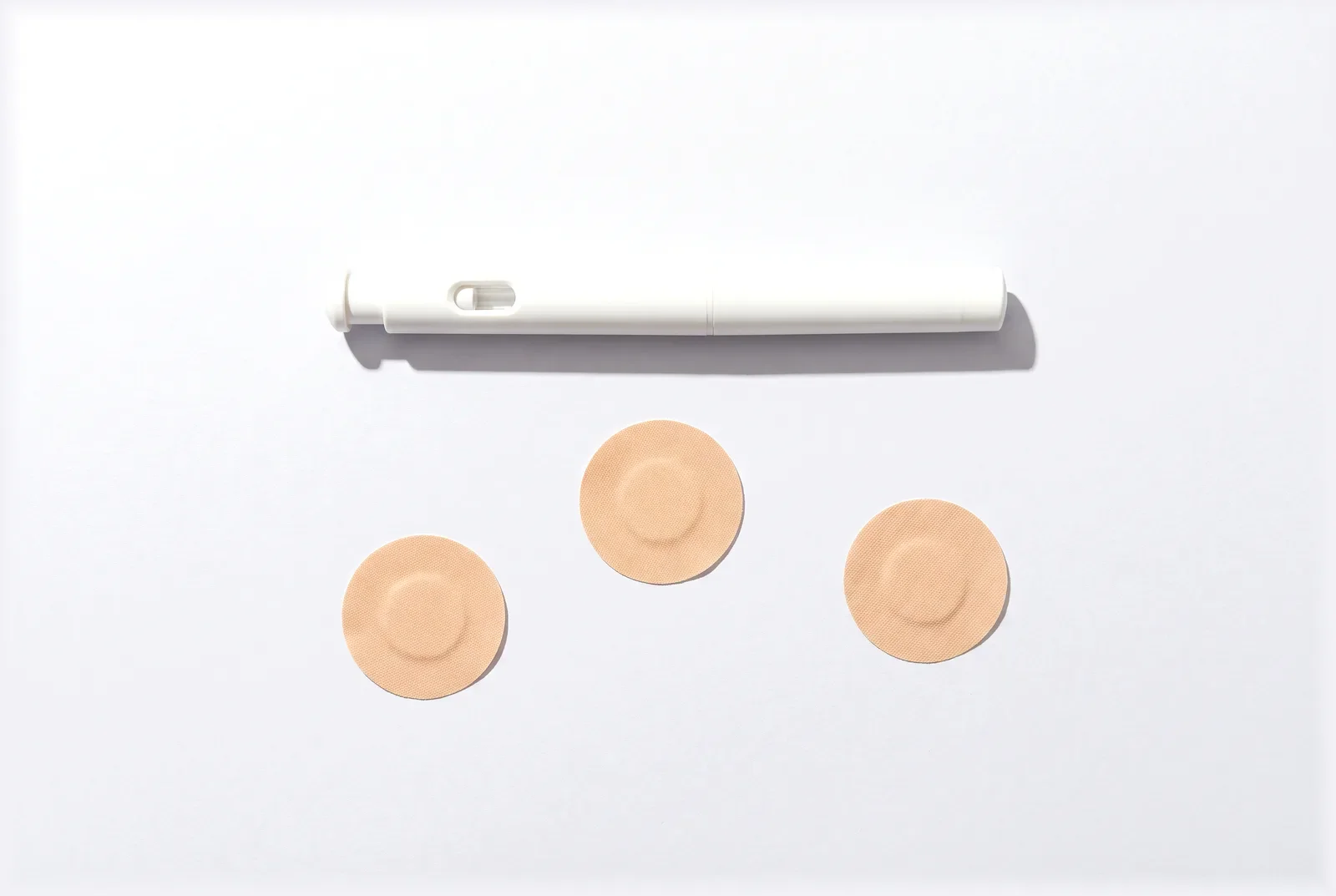
The Mounjaro injection sites in the single-dose pen instructions for use are the stomach (abdomen), the thigh and the back of the upper arm. Mounjaro's instructions say you or another person can inject the abdomen or thigh, another person should give the back-of-arm injection, and the site should be rotated. Zepbound's instructions name the same three areas and say another person can inject the back of the upper arm. Your prescriber decides anything beyond what the label says.
In short
- Mounjaro's and Zepbound's instructions for use name the abdomen, thigh and back of the upper arm, with another person giving the arm injection ("should" in Mounjaro's, "can" in Zepbound's).
- Zepbound's instructions for use say to change the site each week, and Mounjaro's prescribing information says to rotate with each dose.
- Zepbound's prescribing information reports similar exposure from the abdomen, thigh or upper arm.
The Zepbound prescribing information, Section 12.3, reports similar exposure from the abdomen, thigh or upper arm, and the labels give a rotation rule for skin. It states that similar exposure was achieved with subcutaneous tirzepatide in those three areas. Mounjaro contains the same active ingredient, tirzepatide.
The sections quoted here do not tie site choice to a stronger effect. What they give instead is a rotation rule and, in the Mounjaro vial instructions, a list of skin to avoid. Rotation means repeated injections do not land on the same small patch of skin.
The rest of this article follows the order a reader needs: the three areas, how to vary them, who can inject where, and which skin to skip. Your prescriber has the final word on your own injections.
The Mounjaro and Zepbound instructions for use name three areas: the abdomen, the thigh and the back of the upper arm. Both are on DailyMed, the US label database, under Mounjaro and Zepbound.
Step 1 of the Mounjaro single-dose pen instructions reads: "You or another person can inject the medicine in your stomach (abdomen) or thigh. Another person should give you the injection in the back of your upper arm."
Step 1 of the Zepbound instructions reads: "You or another person can inject into your stomach (abdomen) or thigh. Another person can inject into the back of your upper arm."
The Mounjaro prescribing information, Section 2.2, says the same in short form: inject subcutaneously in the abdomen or thigh, or have another person inject in the back of the upper arm. If you are unsure which area suits you, ask your prescriber or pharmacist.
The Zepbound instructions for use say to change (rotate) your injection site each week, and the Mounjaro prescribing information, Section 2.2, says to rotate injection sites with each dose. Both ask for a change from one injection to the next.
Zepbound's instructions add a detail. The same body area is allowed if the exact spot changes. Lilly's Spanish-language patient page for Mounjaro also says the injection zones should be alternated every week.
Zepbound's wording allows the same body area, so the requirement it states is a changed exact spot. How you plan the sequence is your choice, within the label.
For how long a dose stays active after you inject, see a week-by-week table of how long Ozempic and Mounjaro stay in the body.
Mounjaro's instructions for use say another person should give the injection in the back of the upper arm, and Zepbound's say another person can. The two labels use different words, "should" and "can", and this article reports each as written.
In both, the abdomen and thigh are areas you or another person can use. The back of the upper arm is the area the instructions assign to another person.
If nobody is available to help, the abdomen and thigh are the areas where the quoted steps say you can inject yourself. Another person, such as a partner, caregiver or nurse, can give an injection in any of the three areas.
If you are unsure whether the arm is right for you, ask your prescriber or pharmacist to go through the instructions with you.
The Mounjaro single-dose vial instructions for use list skin to avoid: do not inject where skin is tender, bruised, scaly or hard, or into scars or damaged skin. They add that you should not inject where skin has pits, is thickened, or has lumps.
That list sits in the vial instructions on the Mounjaro DailyMed record. It is written for the vial, so check your own pen's instructions for its wording.
If you notice a lump, a thickened patch or damaged skin where you have been injecting, raise it with your prescriber or pharmacist. Ask them what to do if skin looks damaged or a reaction gets worse.
Mounjaro, Zepbound, Ozempic and Wegovy all list the abdomen, thigh and upper arm, but each label words its rotation rule differently. The table sets the quoted wording side by side. It reports each label and ranks none of them.
| Pen | Areas the label names | Upper arm | Rotation wording | Distance from navel |
|---|---|---|---|---|
| Mounjaro (IFU Step 1, PI Section 2.2) | Abdomen, thigh, back of upper arm | Another person "should" | Rotate injection sites with each dose | At least 5 cm in Lilly's EU patient guidance, not in the US sections quoted |
| Zepbound (IFU Step 1) | Abdomen, thigh, back of upper arm | Another person "can" | Change (rotate) your injection site each week; same body area if the exact spot changes | Not stated in the section quoted |
| Ozempic (PI Section 2.1) | Abdomen, thigh, upper arm | Not specified in the section quoted | Use a different injection site each week when injecting in the same body region | Not stated in the section quoted |
| Wegovy (PI Section 2.1) | Abdomen, thigh, upper arm | Not specified in the section quoted | Rotate injection sites with each dose | Not stated in the section quoted |
The Ozempic and Wegovy rows come from their prescribing information on DailyMed, Ozempic and Wegovy. The Mounjaro and Zepbound rows come from their pen instructions for use.
Read across, the three areas match on all four pens. Ozempic ties its weekly change to the same body region. A "not stated" cell means the quoted section says nothing on that point, not that the label forbids it.
Site rotation goes wrong mostly through small assumptions. These are the ones the labels and sources help you avoid.
Dose & Lose can help you record where each injection went. In the Dose & Lose app, you log each dose with the medication, date, time, injection site, a pain level from 0 to 10 and notes. With rotation turned on, the app remembers the last site and suggests the next one on the other side. You choose.
The app does not tell you which areas your label allows, prescribe anything or give dosing advice.
For a separate question, you can estimate how much semaglutide or tirzepatide is still active from your own doses with the free calculator on this site.
Lilly's European patient information says at least 5 cm from the navel. That distance appears in Lilly's patient pages for Mounjaro in Europe, not in the US instructions for use quoted here. The same pages list thighs or upper arms as alternatives and say to rotate the area each week. Follow your own country's leaflet.
No. The labels tell you to change the site, so the same exact spot twice in a row is not what they describe. Zepbound's instructions for use say to rotate the site each week, and allow the same body area if the exact spot changes. Mounjaro's prescribing information says to rotate with each dose.
The Ozempic prescribing information says injections in the same body region as insulin should not be adjacent to each other. That instruction comes from the Ozempic label. The Mounjaro and Zepbound sections quoted here do not address it. Ask your prescriber or pharmacist what applies to your medicines.
Published by Petros IT Solutions SRL under the byline Dose & Lose Editorial Team. See the editorial policy for how figures are checked. Corrections: office@doseandlose.com.